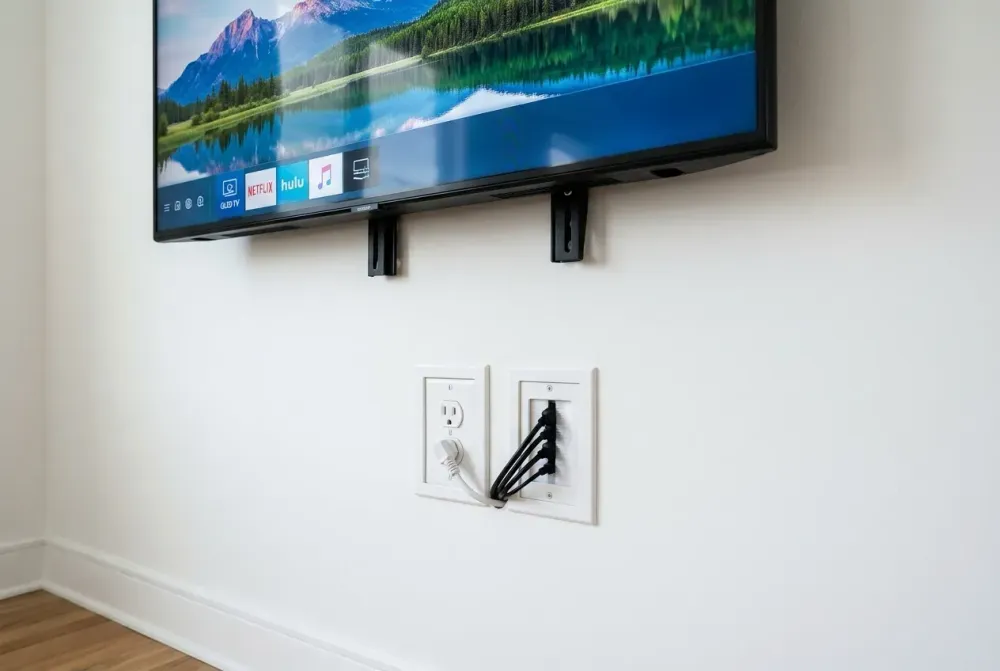
What's Inside Your Walls? A Homeowner's Guide to Safe TV Mounting
What is behind your drywall matters just as much as the TV itself. Learn the differences between mounting on wood studs, metal studs, and concrete, and how TVPro ensures a safe, secure installation.
Table of Contents18 sections
- What's Inside Your Walls? A Homeowner's Guide to Safe TV Mounting
- 1. Wood Studs: The Most Common Home Structure
- Why Wood Studs Are Common:
- Safe TV Mounting in Wood Stud Walls
- 2. Metal Studs, Concrete & High-Rise Walls
- What Are Metal Studs?
- Why Metal Studs Are Used:
- Safe TV Mounting in Metal Stud Walls
- Concrete, Masonry & Commercial Installs
- 3. Wood vs. Metal Studs: A Quick Comparison
- 4. How TVPro Knows What's Inside Your Walls
- Pre-Arrival Verification & AI Analytics
- Why Pre-Arrival Prep Helps You:
- FAQ
- Can you mount a TV on a metal stud wall?
- How do I know if my building has metal studs?
- Is it safe to mount a TV on drywall alone?
- What happens if the technician finds concrete behind the drywall?
What's Inside Your Walls? A Homeowner's Guide to Safe TV Mounting
What is behind your walls matters just as much as the wall itself. Different homes and buildings use different structures, and professional TV mounting is not one-size-fits-all. Using the right hardware, tools, and experience ensures your television is mounted securely, safely, and built to last.
Before you mount a TV, it is essential to understand what type of wall studs or materials you are dealing with. Here is a complete homeowner's guide to wood studs, metal studs, concrete walls, and how to ensure a safe installation.
️ Need Your TV Mounted on Wood Studs?
Our technicians find studs accurately, use professional-grade screws, and route wires cleanly. Let us handle the heavy lifting.
1. Wood Studs: The Most Common Home Structure
Most residential homes in the United States use wood stud framing. These studs are the vertical wooden boards that make up the skeleton of your drywall.
Need Your TV Professionally Mounted?
Save time and secure your screen. Our technicians handle drywall, plaster, brick walls, and wire concealment.
- Spacing: Wood studs are usually spaced 16 inches on center (measured from the center of one stud to the next), though some homes use a 24-inch spacing.
- Fireplaces: Fireplace framing can differ significantly from standard interior walls. Every fireplace chase is a more individual structural assembly that requires careful inspection.
- Why they are popular: Wood framing is cost-effective, highly practical, strong, and easy to modify during home renovations.
Why Wood Studs Are Common:
- Cost-effective and widely available
- Easy to renovate and modify
- Excellent structural performance for low-rise residential buildings
- Flexible layouts for a variety of home designs
Safe TV Mounting in Wood Stud Walls
A TV should ideally be anchored into at least one wood stud (and ideally two for larger TVs). With the correct technique, a TV can sometimes be mounted using one wood stud combined with heavy-duty toggle bolts placed in a staggered pattern to distribute the load. However, toggle bolts alone are not recommended for most installations, especially for full-motion mounts or larger screens.
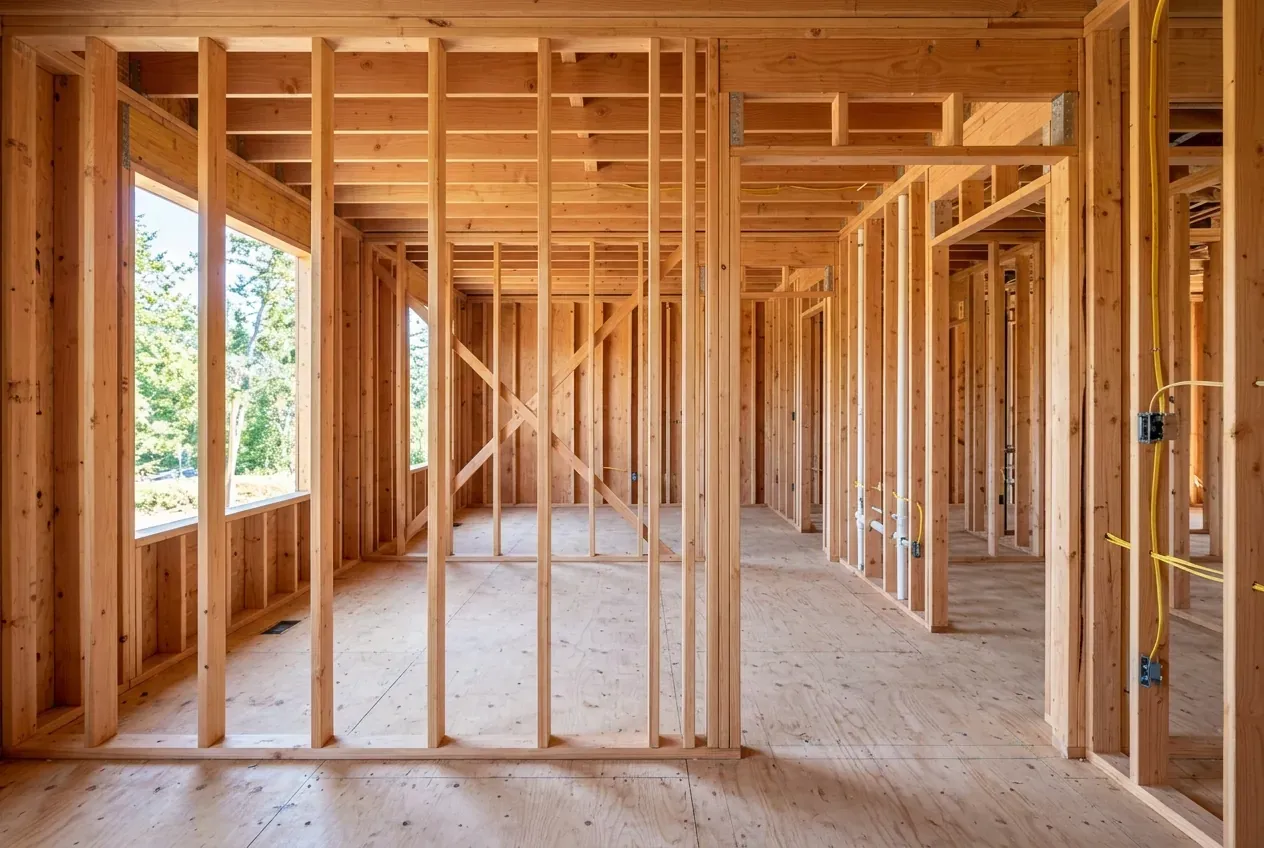
Suggested Alt Text: Wood stud wall framing inside a residential home under construction
2. Metal Studs, Concrete & High-Rise Walls
If you live in a modern high-rise condo, an apartment building, or want to install a TV in a commercial office, your walls are likely built with metal studs or concrete rather than wood.
What Are Metal Studs?
Unlike wood framing, metal studs are steel framing members. They are commonly used in:
- Office and commercial buildings
- Schools and hospitals
- High-rise apartments and downtown towers
- Modern condos and multifamily complexes
Metal stud walls also feature metal electrical boxes and protected wiring (often run inside conduit or metal-clad cable) to meet strict local safety and fire codes. High-rise buildings frequently combine concrete structures with metal stud framing for interior walls.
Why Metal Studs Are Used:
- Fire resistance for safer buildings
- Dimensional stability that resists warping or shrinking
- Wind resistance and structural efficiency for tall towers
- Long-term durability in demanding environments
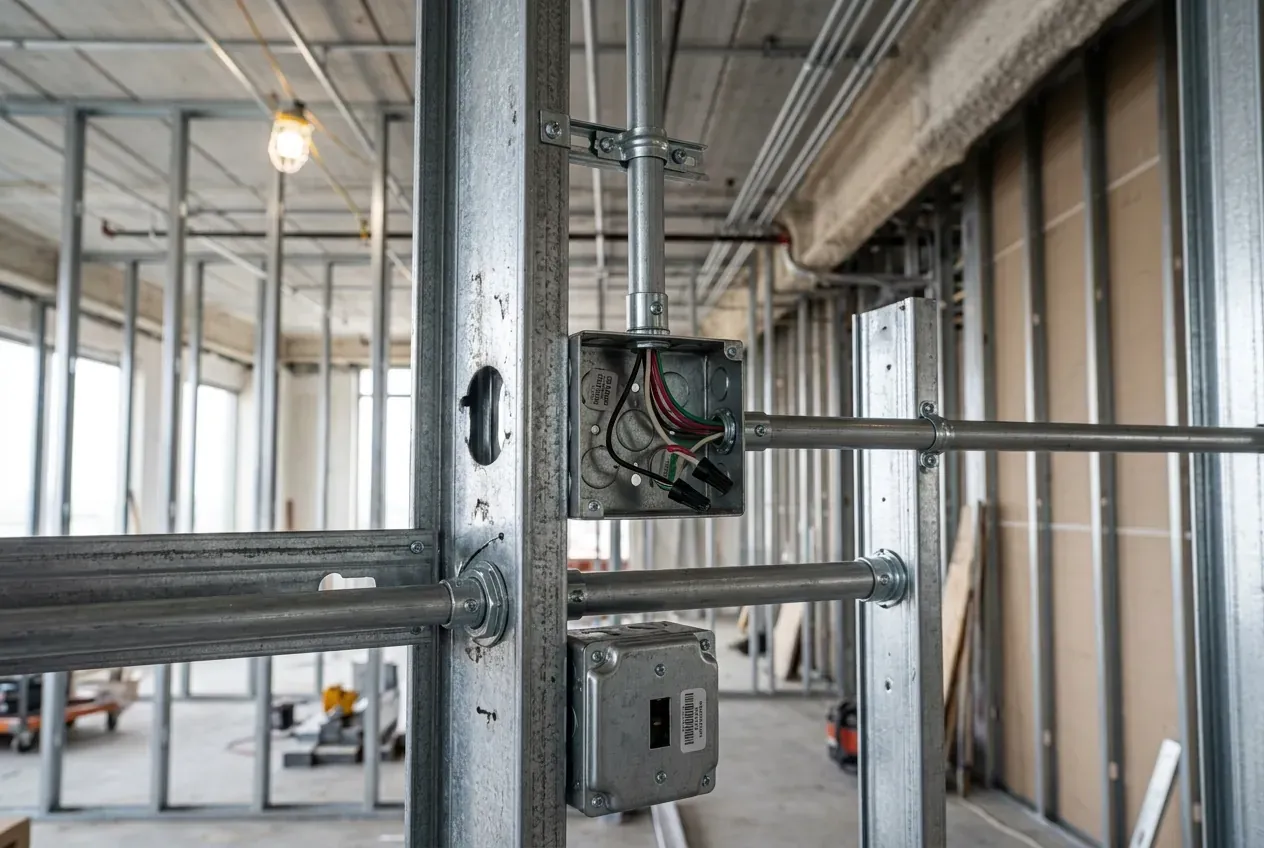
Suggested Alt Text: Metal stud wall framing with metal electrical boxes and conduit in a modern building
Safe TV Mounting in Metal Stud Walls
Mounting a TV on metal studs requires more time, more care, and specialized tools. Steel studs are hollow, meaning standard wood screws will not hold.
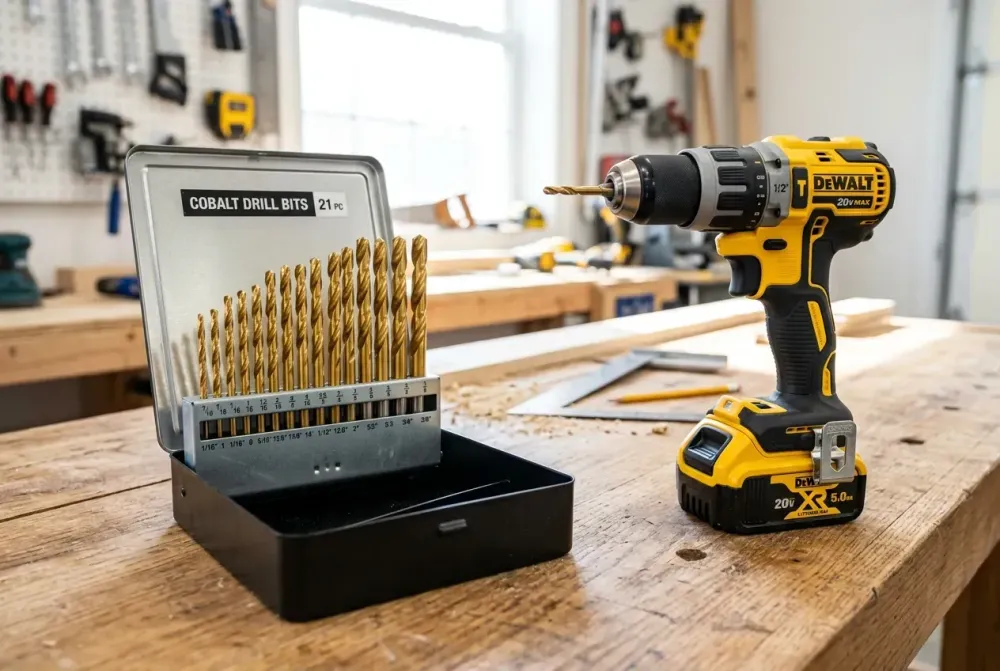
- Specialized Tools: Professional installers use cobalt-coated drill bits designed to cut through steel without overheating.
- Heavy-Duty Anchors: Heavy-duty toggle bolts or snap toggles are required to anchor the bracket securely.
- Load Distribution: While one metal stud might work for small TVs, anchoring into two studs is always recommended for large displays. Toggle bolts alone should never be the default solution for full-motion mounts, which place significant pulling stress on the wall.
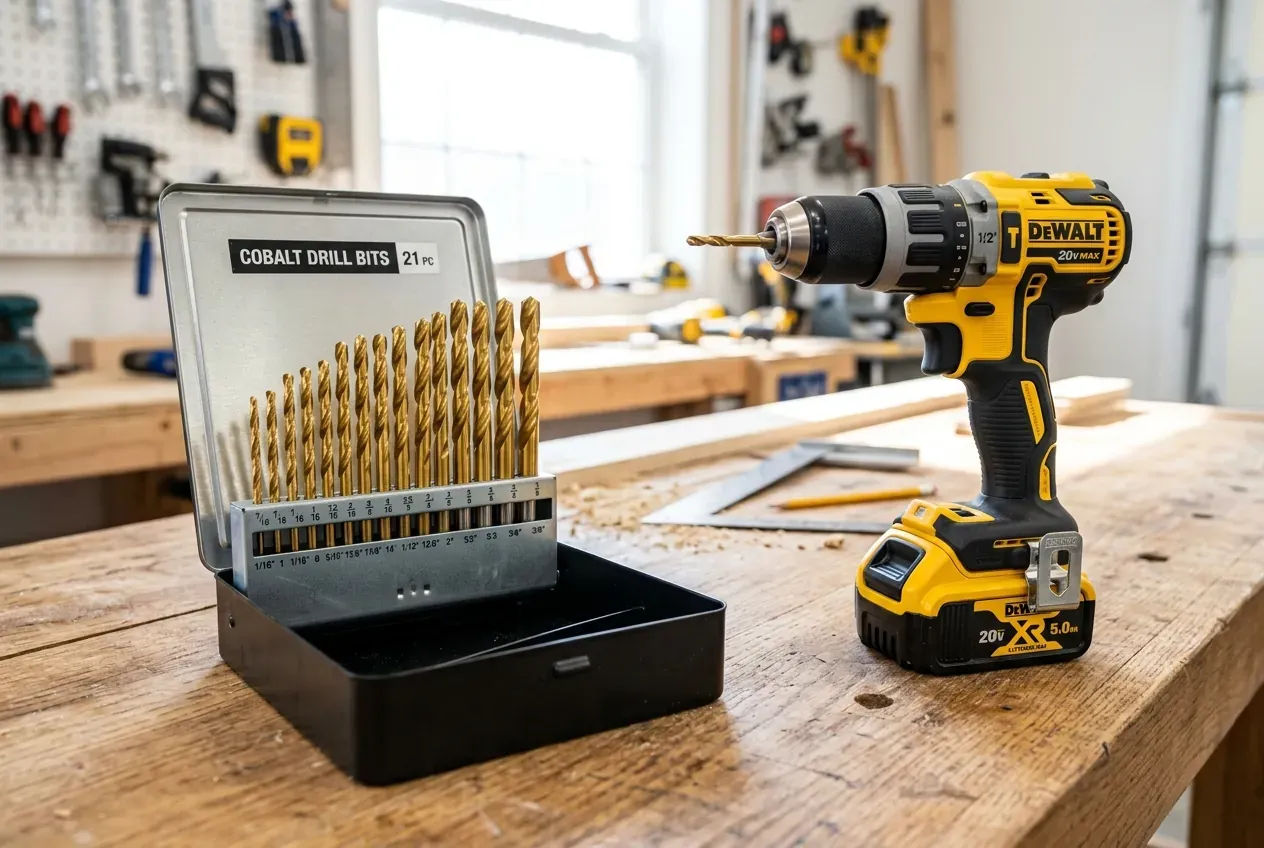
Suggested Alt Text: Set of cobalt drill bits next to a power drill designed for drilling through metal steel studs
Concrete, Masonry & Commercial Installs
Concrete, block, stone, and structural masonry are also common in high-rises and commercial lobbies. These solid surfaces require specialized masonry drill bits, concrete anchors, and active dust control to ensure a safe installation. Whether it's a lobby display, conference room screen, or digital signage, concrete mounts are rock-solid when done correctly.
Mounting on Metal Studs or Concrete?
High-rises, condos, and offices require heavy-duty toggles and cobalt drill bits. Avoid wall damage and let our specialists handle the complexity safely.
3. Wood vs. Metal Studs: A Quick Comparison
| Feature | Wood Studs | Metal Studs | | :--- | :--- | :--- | | Speed & Ease | Quicker and simpler to mount into. | Takes more time, specialized tools, and careful planning. | | Common Buildings | Single-family homes, townhomes, older buildings. | Offices, schools, high-rise condos, apartments. | | Drilling | Standard wood drill bits. | Cobalt-coated drill bits built for steel. | | Anchoring | Lag bolts screwed directly into the wood. | Snap toggles or heavy-duty toggle bolts. | | Strength | Very strong; screw grips the wood fibers. | Extremely strong when using correct toggle anchors. |
4. How TVPro Knows What's Inside Your Walls
You don't have to guess what wall type you have. At TVPro, we use a multi-step verification process to prepare for your installation before we even arrive.
Pre-Arrival Verification & AI Analytics
Before dispatch, our logistics team reviews your address using multiple data sources:
- Google Maps & Street View: We look at the building type, height, and exterior construction style.
- Public Property & Permit Data: We check the building age, zoning, and construction records.
- AI Analytics Model: Our internal system evaluates building height and zoning, flagging probable metal-stud or concrete wall systems.
- Internal Job History: We cross-reference previous installations in your specific building or neighborhood.
If our pre-arrival review indicates metal studs or concrete, we make sure our technician brings specialized cobalt bits, masonry anchors, and extra hardware. If the wall structure remains unclear, our technician will verify it on-site using commercial stud finders, explain the setup, and provide clear options before drilling.
Why Pre-Arrival Prep Helps You:
- Fairer Pricing: We prepare for complexity in advance with no hidden fees.
- Faster Setup: We arrive with the exact tools, parts, and hardware needed.
- Fewer Surprises: You know exactly what to expect.
- Cleaner Install: Using the right tools means less dust, less rework, and a secure fit.
Ready for a Safe, Professional Setup?
We analyze your building type, verify your wall structure, and bring the exact tools needed for a flawless install. Same-day bookings are available!
FAQ
Can you mount a TV on a metal stud wall?
Yes, but you cannot use standard wood screws. You must use specialized cobalt drill bits and heavy-duty toggle bolts designed for steel framing.
How do I know if my building has metal studs?
If you live in a high-rise condo, apartment building with more than 8 floors, or a modern office space, your walls are almost certainly constructed with metal studs.
Is it safe to mount a TV on drywall alone?
No. Drywall alone cannot support the weight of a TV, especially if it is on an articulating full-motion mount. The mount must be anchored into wood studs, metal studs, or concrete.
What happens if the technician finds concrete behind the drywall?
Our technicians carry masonry drill bits and concrete sleeve anchors to securely mount the bracket directly into the concrete structure.