How to Hide TV Wires Inside the Wall Safely
Learn how to hide TV cords inside drywall safely and legally. Understand the difference between low-voltage cables, code-compliant in-wall power bridge kits, and fire safety.
Table of Contents8 sections
- How to Hide TV Wires Inside the Wall Safely
- Visible Wires Can Ruin a Beautiful Installation
- What TVPro Checks Before Work Begins
- TV Models and Devices That Make This Topic More Valuable
- Wall Type, Mount Type and Safety Details
- Quality Standard: What the Customer Should Feel at the End
- Common Mistakes This Article Should Help Customers Avoid
- FAQ
How to Hide TV Wires Inside the Wall Safely
Suggested Alt Text: how to hide tv wires inside wall safely
Visible Wires Can Ruin a Beautiful Installation
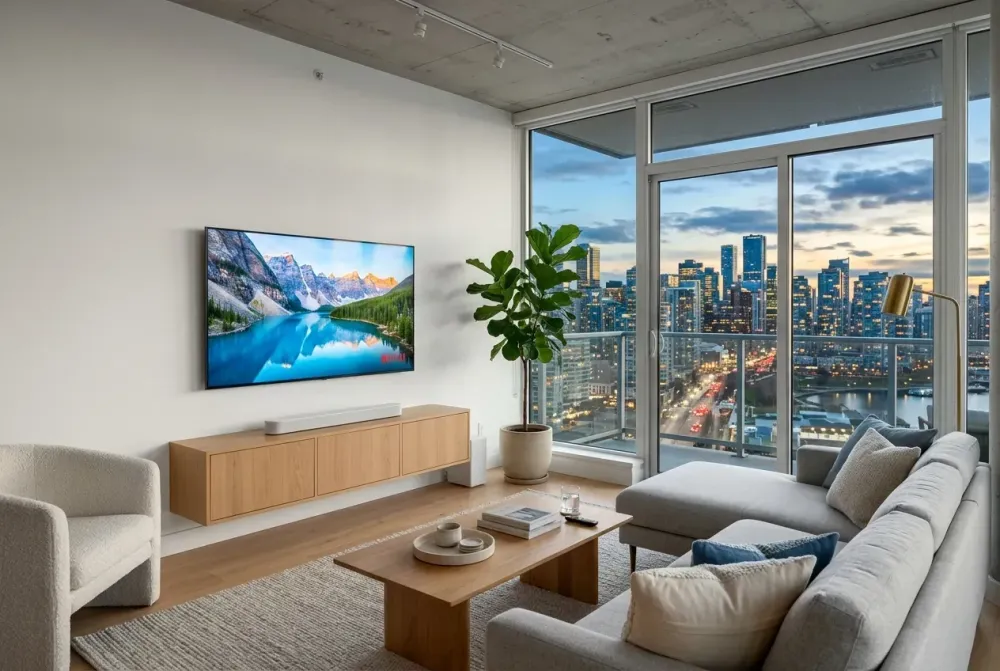
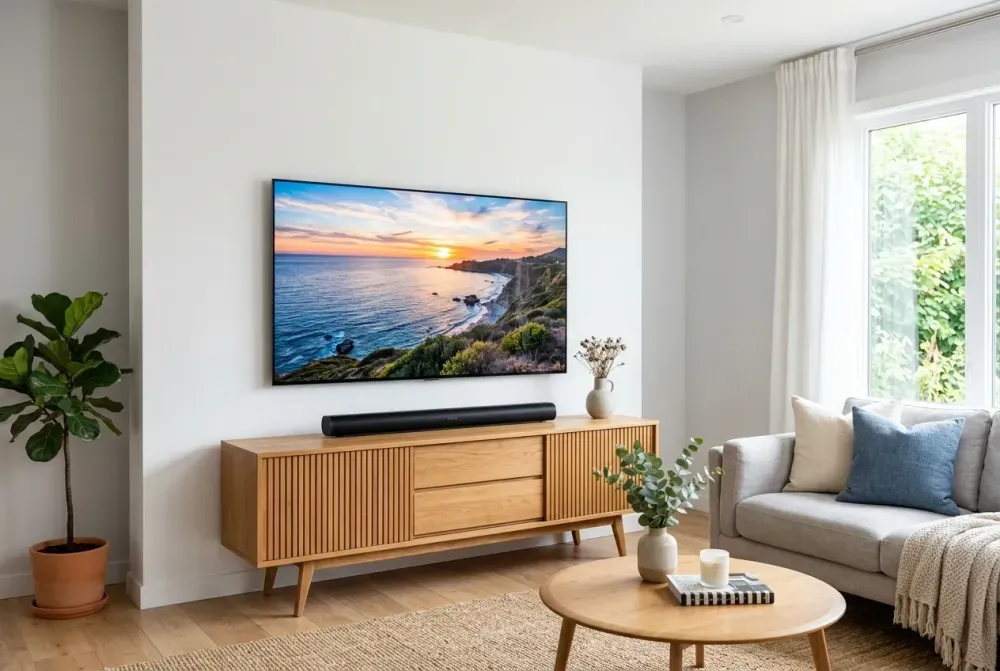
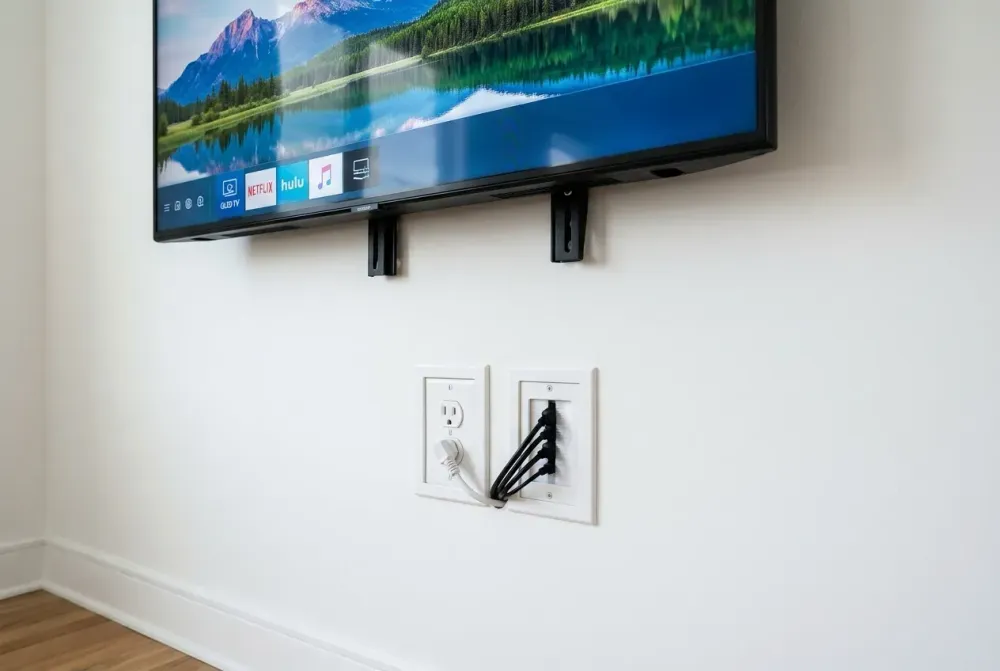
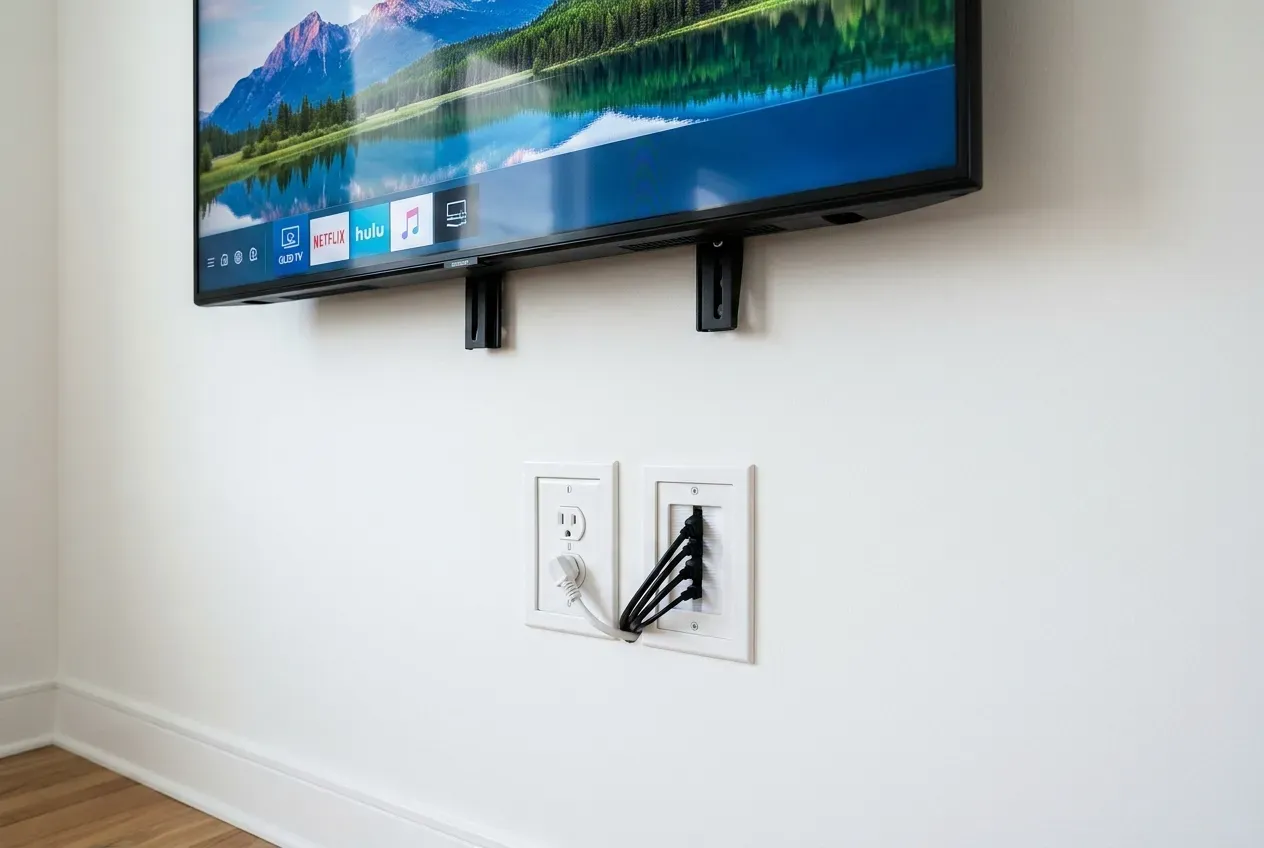
A mounted TV immediately makes a room look cleaner, but visible wires can destroy the effect. A power cord hanging down the wall, HDMI cables crossing a fireplace, or device wires sitting under a premium Frame TV make the setup feel unfinished. That is why one of the most requested TVPro services is hidden wires TV installation. Customers want the TV to look like it belongs on the wall, not like it was attached after the room was designed. What Internal Concealment Means Internal concealment means routing low-voltage cables inside the wall when the wall structure and safety rules allow it. This may include HDMI cables, optical audio cables, Ethernet cables, coax cables, or other signal lines. The result is a cleaner wall with fewer visible cords. Power is different. Power cords must be handled with approved in-wall power kits, recessed outlets, or proper electrical solutions. A professional company should never simply bury an unsafe power cord inside the wall and call it done. Why Wall Type Matters Drywall with wood studs is usually the easiest wall for in-wall wire concealment. Metal studs, brick, concrete, tile, stone, and fireplace walls are more complex. The route may be blocked by insulation, fire blocking, plumbing, electrical wires, horizontal framing, or structural materials. A technician must inspect the wall and choose the correct method. Sometimes the cleanest and safest option is a recessed box. Sometimes it is a surface channel painted to match the wall. Sometimes it is routing wires through a cabinet or nearby built-in. HDMI Cables, Streaming Devices and Soundbars Modern TVs often connect to Spectrum, Xfinity, DIRECTV, Apple TV, Roku, Amazon Fire TV Stick, PlayStation, Xbox, Nintendo Switch, soundbars, and AV receivers. All of these devices create cable needs. A clean installation plans the cable path before the TV is mounted. For soundbars, HDMI ARC or eARC is often used for better audio control. For gaming consoles, high-speed HDMI cables matter. For Frame TVs, One Connect Box planning matters. TVPro treats cable management as part of the full entertainment setup, not an afterthought.
The Safety Side of Hidden Wires The safest hidden-wire installations respect the difference between low-voltage and high-voltage wiring. A professional technician uses proper wall plates, cable pass-throughs, recessed boxes, approved power relocation options, and clean routing methods. This protects the customer, the TV, the home, and the final appearance. A cheap hidden-wire job can look fine for one day and create problems later. TVPro focuses on clean work that is also responsible work. The Final Look When wires are hidden correctly, the TV wall looks calm. The screen becomes the focal point. The room feels more expensive. The customer no longer has to look at cords, boxes, and messy cable loops every day. This matters most for living rooms, bedrooms, fireplaces, home theaters, offices, commercial displays, and premium TVs such as Samsung The Frame, LG OLED Gallery, TCL NXTFRAME, and Hisense CanvasTV. Expanded SEO Body Sections Real Customer Scenarios Around hide TV wires inside wall Most customers do not search for hide TV wires inside wall because they want a technical lecture. They search because something in the home or business needs to look better, work better, or feel safer. One customer may have a new 75-inch TV sitting in a box. Another may have a fireplace wall that looks perfect except for visible wires. Another may be moving into an apartment and cannot figure out whether the wall has wood studs, metal studs, or concrete behind it. This is where TVPro turns a search query into a service experience. The article should speak to the customer in practical language: what the service includes, what can go wrong, what choices matter, and how a professional installer protects the TV, the wall, the room, and the customer’s time. Use terms like hide TV wires inside wall, in-wall wire concealment, internal concealment naturally, but always connect them to a real problem the customer understands.
Ready for Professional Setup?
Get a free, no-obligation estimate from local certified technicians in the Greater Houston Area.
What TVPro Checks Before Work Begins
Before a technician starts drilling, the job should already have a plan. TVPro checks the TV size, TV weight, VESA pattern, mount type, wall material, stud location, viewing height, cable path, outlet location, and any accessory needs. For this topic, the most important related services are Internal concealment, in-wall wire concealment, recessed box installation, HDMI cable routing, clean cable management. This preparation is what separates professional TV installation from guesswork. The customer should not feel like the technician is experimenting. They should see a clear process: inspect the wall, confirm the placement, explain the options, protect the work area, install the hardware, level the TV, organize cables, test the setup, clean up, and present the final result.
TV Models and Devices That Make This Topic More Valuable
Modern TVs are larger, thinner, and more design-sensitive than older screens. Samsung The Frame, Samsung The Frame Pro, LG OLED Gallery/G-Series, TCL NXTFRAME, Hisense CanvasTV, Sony BRAVIA, Samsung Neo QLED, and large 75-inch or 85-inch screens all make professional installation more important. The more premium the TV, the more obvious a poor installation becomes. This article should also connect to device and accessory needs such as soundbar mounting, HDMI cable management, Apple TV, Roku, Amazon Fire TV Stick, Xfinity box, Spectrum cable box, DIRECTV receiver, PlayStation, Xbox, recessed media boxes, and hidden device placement. These phrases support long-tail SEO while making the article more useful.
Wall Type, Mount Type and Safety Details
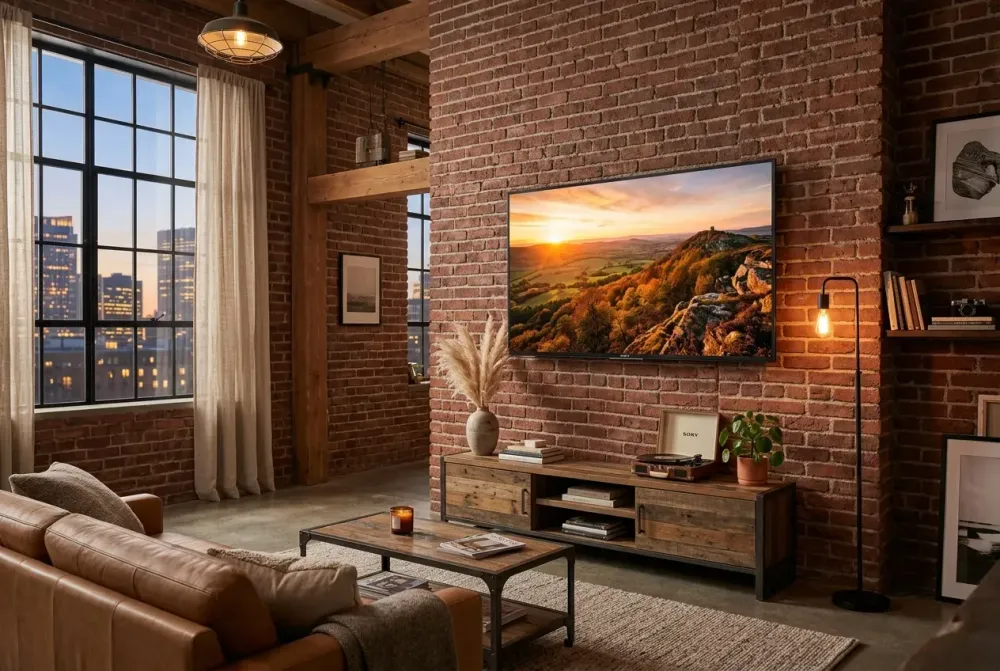
Every wall changes the installation. Drywall with wood studs is usually straightforward. Metal studs require different anchors and more careful load distribution. Brick, concrete, tile, stone, and fireplace walls require specialty drilling, dust control, and the right hardware. A full-motion mount creates more leverage than a fixed mount. A pull-down fireplace mount requires balance and clearance testing.
This is why hidden wires TV installation, recessed box installation, TV cable management, HDMI wall pass-through, clean TV installation should appear in the article as supporting SEO language. The goal is not to stuff keywords. The goal is to show the customer that TVPro understands the wall, the hardware, and the final design outcome.
Quality Standard: What the Customer Should Feel at the End
A clean installation should feel calm. The TV should be level, centered, secure, and placed at a height that makes sense for the room. The cables should be organized or hidden when possible. The technician should explain how the mount works, confirm the TV turns on, clean the area, and leave the home looking respected. For TVPro, quality is not only the physical result. It is also the communication before the appointment, the way the technician enters the home, the use of shoe covers, the respect for furniture and floors, the careful cleanup, and the confidence the customer feels when the technician leaves.
Common Mistakes This Article Should Help Customers Avoid
Customers often make mistakes because TV mounting looks easier than it is. They buy a mount that does not fit the VESA pattern. They underestimate the weight of a large TV. They choose a full-motion mount for a weak wall. They mount a fireplace TV too high. They forget about device placement. They hide cables unsafely. Or they ask a friend to help and then feel stuck with a result they do not love. Use this section to position TVPro as the safe choice for hide TV wires inside wall. Do not attack the customer. Educate them. The message should be simple: good planning is cheaper than rework, and professional TV mounting protects both the TV and the room. Internal Linking Opportunities for tvprousa.com When publishing this article, link naturally to related TVPro service pages. Strong internal links should include TV mounting service, same-day TV mounting, Frame TV installation, fireplace TV mounting, wire concealment, recessed box installation, full-motion mount installation, MantelMount installation, commercial TV installation, and TV dismount/remount where relevant. Also add local links to city pages. For example: TV Mounting in Houston, TV Mounting in Dallas, TV Installation in Austin, TV Mounting in Chicago, TV Mounting in Charlotte, TV Mounting in Kansas City, TV Mounting in Philadelphia, and any active TVPro service city. This helps each blog article support local SEO instead of sitting isolated. Conversion Angle: How to End the Article Strong The article should end with a practical next step. A customer reading about hide TV wires inside wall is usually close to booking or at least comparing companies. The CTA should not sound desperate. It should sound useful: send the TV size, wall photo, mount type, and preferred location, and TVPro can guide the customer toward the right installation option. A strong final paragraph should remind the customer that TVPro works cleanly, communicates clearly, respects the home, and specializes in advanced installations - from standard TVs to Frame TVs, recessed boxes, hidden wires, full-motion mounts, fireplaces, media walls, and commercial projects.
FAQ
Can all TV wires be hidden inside the wall? Not always. It depends on wall structure, cable type, obstacles, and safety requirements. Can power cords go inside the wall? Only with proper code-compliant methods such as approved in-wall power kits or recessed outlets. Unsafe cords should not be buried. Can you hide HDMI cables? Yes, HDMI cables are commonly routed through walls when the path allows it. Can wires be hidden behind a fireplace TV? Often yes, but fireplace walls require careful inspection. Do recessed boxes help hide wires?
Yes. Recessed boxes can hide outlets, cables, and devices behind the TV. Does TVPro hide wires in brick or concrete? TVPro provides concealment options for brick and concrete when site conditions allow it.
️ Need Professional TV Installation?
Looking for certified TV mounting, hidden wires, and a clean finished result? TVPro delivers professional installations with same-day appointments available.